The Problem Nobody Wanted to Solve
If you’ve spent the last year building anything with AI models, you know the friction point. You want Claude or another LLM to talk to your database. Your codebase. Your internal APIs. Your documentation system. So you write a wrapper. Then another wrapper. Then a custom middleware layer. Before you know it, you’re maintaining more glue code than actual logic, and every time you want to add a new data source, you’re building from scratch.

Anthropic released the Model Context Protocol in November 2024. Quiet launch. No massive marketing push. But by early 2026, something shifted. Cursor integrated it. Zed integrated it. Replit, JetBrains IDEs. OpenAI announced support, which tells you everything about where this is heading. The protocol wasn’t revolutionary in concept. The execution was. It solved the problem by providing a standardized way for AI models to consume structured context from anywhere.
What Actually Makes MCP Work
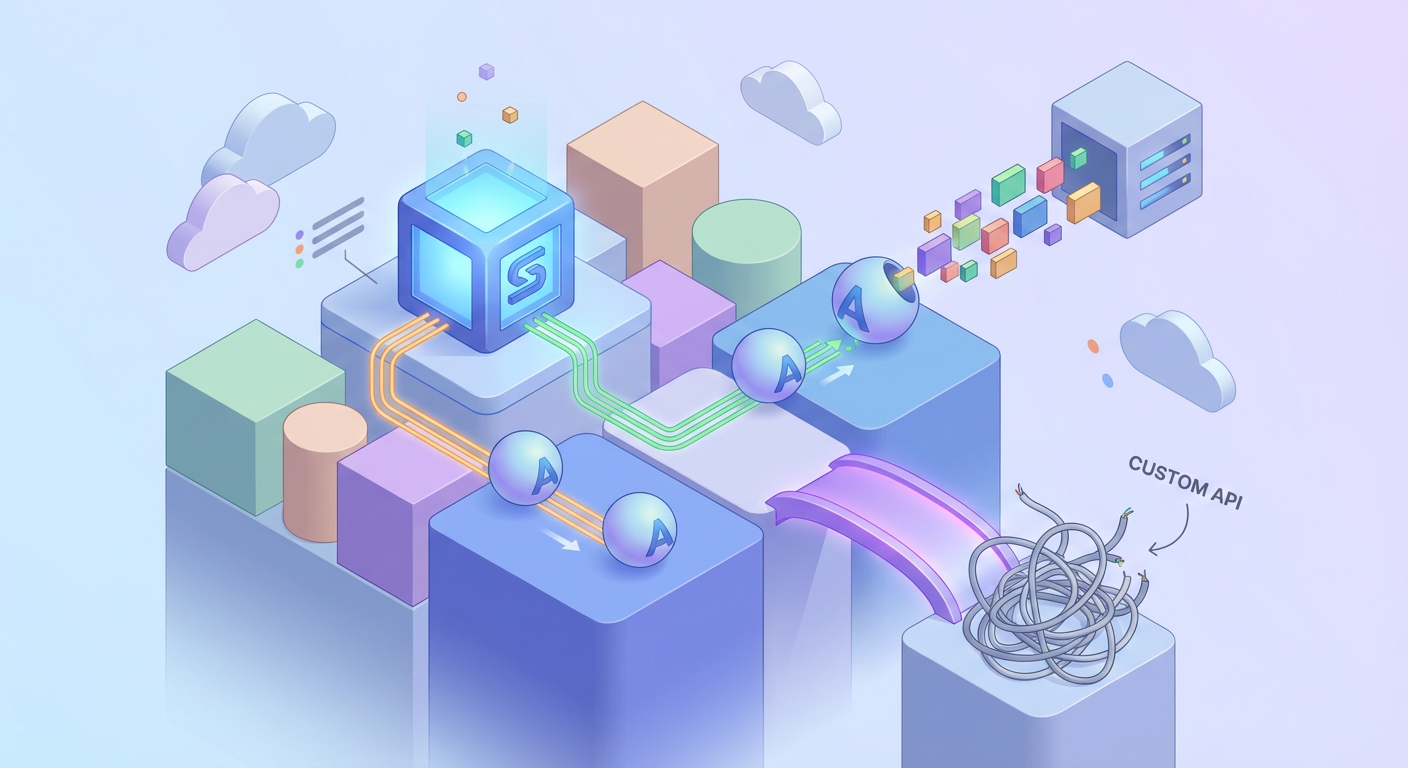
The architecture is simple enough to explain in two sentences, but flexible enough to handle real complexity. AI models act as clients. They send requests to servers. Those servers expose whatever context lives on your end: database schemas, file contents, API responses, documentation indexes. No custom integration code required. Just a client-server handshake using a standard protocol.
The beauty is in the reduction of friction. Instead of writing custom API endpoints and authentication layers for every tool you want your AI agent to access, you write a single MCP server that knows how to speak the protocol. Your agent knows how to speak the protocol. They understand each other. The MCP GitHub repository had accumulated over 28,000 stars by March 2026, with hundreds of community-built server implementations handling databases, APIs, file systems, and developer tools. That growth wasn’t accidental. It happened because the protocol solved a real problem that thousands of teams faced simultaneously.
Block and Apollo were among the early enterprise adopters. They used MCP to connect Claude-based agents directly to internal codebases and documentation systems. Not through hacky workarounds. Through the protocol. That’s when you know something has staying power: when enterprises adopt it because it reduces operational overhead, not because of marketing.
Getting Started Without the Overwhelm
The intimidation factor is real. Protocols feel academic. Schemas feel dense. But starting with MCP is actually approachable if you know where to focus first. Begin with a single data source. Pick something you understand deeply. If you run a small SaaS, maybe it’s your user database. If you’re a consultant, maybe it’s your project documentation. Build an MCP server that exposes just that one thing to Claude. Get it working. Move to the next thing.
The Anthropic Model Context Protocol documentation walks you through the core concepts. Resources, tools, prompts. That’s the basic vocabulary. A resource is something your server knows about: a database query, a file, an API endpoint. A tool is an action your server can perform. A prompt is context your server injects into the conversation. Start with resources. Most first projects only need resources and one or two tools.
Here’s the practical path: Pick your data source. Write a simple server that exposes it via MCP. Connect Claude through an IDE or application that supports the protocol. Test that Claude can ask questions about your data and get sensible answers. Then iterate. Add another data source. Add a tool if you need one. The protocol gives you room to grow without forcing complexity on you upfront.
Why Competitors Are Adopting It
OpenAI’s endorsement in early 2026 was the signal moment. OpenAI didn’t invent MCP. Anthropic did. But OpenAI added MCP support to its API and Agents SDK anyway. That’s not typical behavior in AI. It suggests the industry recognized something important: fragmentation was more expensive than collaboration. Every company building its own integration protocol meant developers had to learn five different ways to do the same thing.
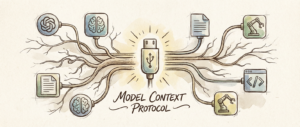
MCP became the USB-C moment because it addressed the real cost of software integration: developer time. When you have to write custom code to connect tools A and B, you pay that cost once. When you have to do it for A through Z, the costs multiply. MCP offered a standard that meant you could build once, integrate anywhere. That’s worth adopting even if it came from a competitor, because the alternative was chaos.
The ecosystem response confirmed this. Developer tools integrated it because their users asked for it. Communities built servers for common platforms because existing solutions felt brittle. Enterprises adopted it because managing fewer integration layers meant fewer things could break. It’s the kind of boring, necessary infrastructure that defines how an industry operates five years down the road.
What This Means for Your Next Build
If you’re building an AI application or agent workflow, MCP should be in your mental model now. Not as a future concern. Now. Because the tools you’re using are already adding support, and the communities around those tools are already building MCP servers for their use cases. You’re not adopting early infrastructure. You’re adopting infrastructure that’s already been tested in production by companies bigger than most startups.
Start small. Pick one integration point. Build an MCP server for it. Spend a few hours understanding how the protocol works. Then ask Claude to use it. See what happens when an AI model can actually talk to your systems without layers of custom glue code between them. That experience will change how you think about building with these tools. It’s the difference between working with AI models that are blind to your context and models that actually understand your domain, your data, your systems.
What’s your biggest integration pain point right now? What data source would you want to expose to an AI model if the friction just disappeared? Those questions matter now, because the answers are actionable in ways they weren’t six months ago. The protocol is here. The tools support it. The community is building around it. Your turn.
